Stronger Together Pack: Easy Family Bonding at Home & Out
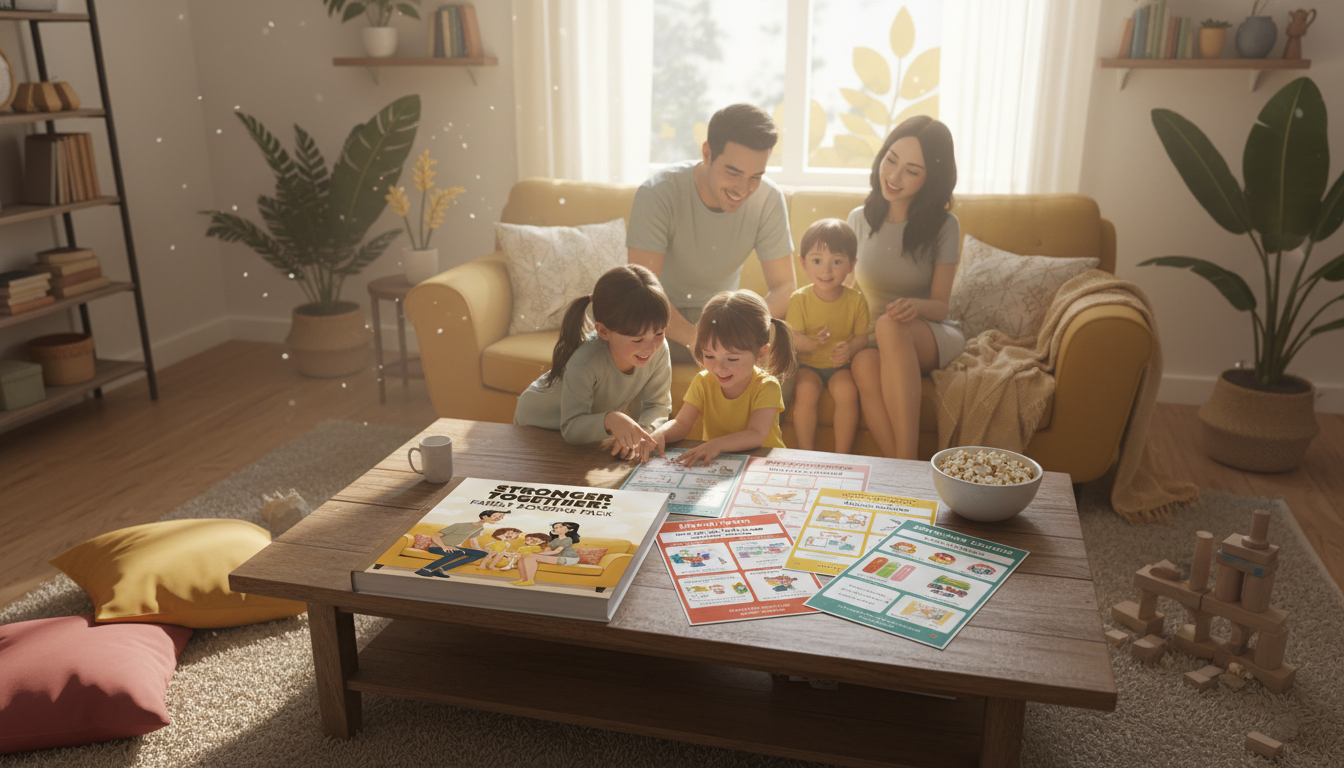
Stronger Together: A Simple Family Bonding Pack for At-Home and Outdoor Connection
Busy schedules, screens, and different energy levels can make quality time feel harder than it should. Stronger Together is a digital family bonding pack built to remove the guesswork with printable activities, a flexible family-time checklist, and an easy eBook guide that helps kids and parents connect in small, repeatable ways—at home or outside.
What the Stronger Together Family Bonding Pack Is
Some families don’t need another big “project”—they need a simple starting point that makes connection feel doable on an ordinary Tuesday. The Stronger Together pack is a digital download designed for families who want ready-to-use ideas without extensive prep, awkward planning meetings, or a long list of supplies.
- Digital download designed for families who want ready-to-use connection ideas without extensive prep.
- Includes printable activities plus guidance that supports both kids and parents participating together.
- Works for quick moments (10–15 minutes) or longer family sessions (30–60 minutes).
- Suitable for at-home downtime, weekends, travel days, and low-cost outdoor time.
- Built around consistency: small actions that are easier to repeat than one big “perfect” family day.
If screens have become the default filler, pairing this kind of pack with a realistic family plan can help. The American Academy of Pediatrics has a helpful Family Media Plan that many families use as a starting framework for boundaries and balance.
What’s Included and How Each Part Helps
The pack is built around the common “stuck points” families run into: decision fatigue, mismatched moods, and limited time. Each component solves one of those problems so it’s easier to begin—and easier to repeat.
- Printable activity pages: Concrete prompts reduce decision fatigue for parents and help kids jump in quickly.
- At-home connection ideas: Low-mess, low-setup options for weeknights and rainy days.
- Outdoor connection activities: Simple ways to turn a walk, backyard time, or park trip into shared bonding.
- Family time checklist: Light structure that helps families track what they enjoyed and repeat what worked.
- eBook guide: A supportive framework for choosing activities by mood, time available, and family dynamics.
Ways to Use the Pack Based on Time and Energy
| Situation | Time | Good fit from the pack | Goal |
|---|---|---|---|
| After-school slump | 10–15 min | Quick prompts + one simple checklist item | Reconnect before homework and routines |
| Weeknight family time | 20–30 min | At-home activity page | Shared laughter and cooperation |
| Weekend reset | 30–60 min | Mix of activities + checklist reflection | Create a repeatable family ritual |
| Outdoor break | 20–45 min | Outdoor connection activity | Movement + conversation without pressure |
| Travel day or downtime | 10–30 min | Printable prompts (easy to pack) | Reduce boredom and spark interaction |
Who It’s For (and When It Helps Most)
Connection looks different in every household, but the same friction shows up again and again: everybody wants quality time, yet no one wants to be the “activities director.” This pack is a practical fit for:
- Parents who want meaningful activities without planning from scratch.
- Kids who enjoy guided games, challenges, and conversation starters.
- Families juggling different ages: choose simpler prompts for younger kids and deeper reflection prompts for older kids.
- Caregivers, grandparents, and blended families looking for neutral, positive ways to connect.
- Helpful during transitions: new school year, moving, new sibling, or when family routines feel scattered.
During stressful seasons, even small routines can be stabilizing. The CDC shares practical ideas on daily coping and stress support that can pair well with gentle family rhythms: How to Cope with Stress.
How to Build a 7-Day Bonding Routine Without Overhauling Your Schedule
Instead of aiming for a huge family night once a month, the simplest approach is a micro-routine: small, predictable, and easy to restart after life gets messy.
- Pick a consistent micro-window: After dinner, before bedtime, or Saturday morning.
- Use a simple rule: One activity + one checklist item (keep it small enough to repeat).
- Rotate formats: Conversation prompt one day, creative activity another, outdoor idea on the weekend.
- Let kids co-lead: Offer two choices from the pack so they feel ownership.
- End with a quick wrap-up: One thing each person liked, and one idea to try next time.
This kind of “lighter than a schedule, stronger than a wish” structure is exactly where a checklist helps: not to measure performance, but to make it easier to notice what’s working.
Making Activities Work for Different Ages and Personalities
When one child is ready to talk and another wants to move, the goal isn’t to force one perfect activity. It’s to choose prompts that allow multiple ways to participate.
Printing and Digital Use Tips (So It Stays Easy)
When to Choose At-Home vs Outdoor Connection Activities
Recommended Picks for Easy Family Connection
If you want a ready-to-use starting point, the core option is the printable pack itself: Stronger Together: Family Bonding Pack.
For families who love turning outdoor time into a bigger tradition—like a backyard “camp-in” or a first camping weekend—pairing connection prompts with cozy time outside can make it easier to unplug: Ultralight 4-Season Tent for family camping nights.
FAQ
Is this pack better for younger kids or older kids?
It works for both. Use shorter, more playful prompts for younger kids, and lean into deeper reflection questions or simple leadership roles (like “host” or timer) for older kids—especially in mixed-age families.
Do the activities require special supplies?
Most are low-prep and rely on common household items. A printer helps for the pages, and basics like pens, paper, or a clipboard are useful, but many prompts can also be used digitally if preferred.
How often should a family use the checklist?
A few times per week or even once weekly works well if it’s consistent. Keep it light by choosing just 1–2 checklist items per session and repeating what your family actually enjoyed.















Leave a comment