Bamboo & Rattan Pendant Chandelier: SE Asian Style Guide
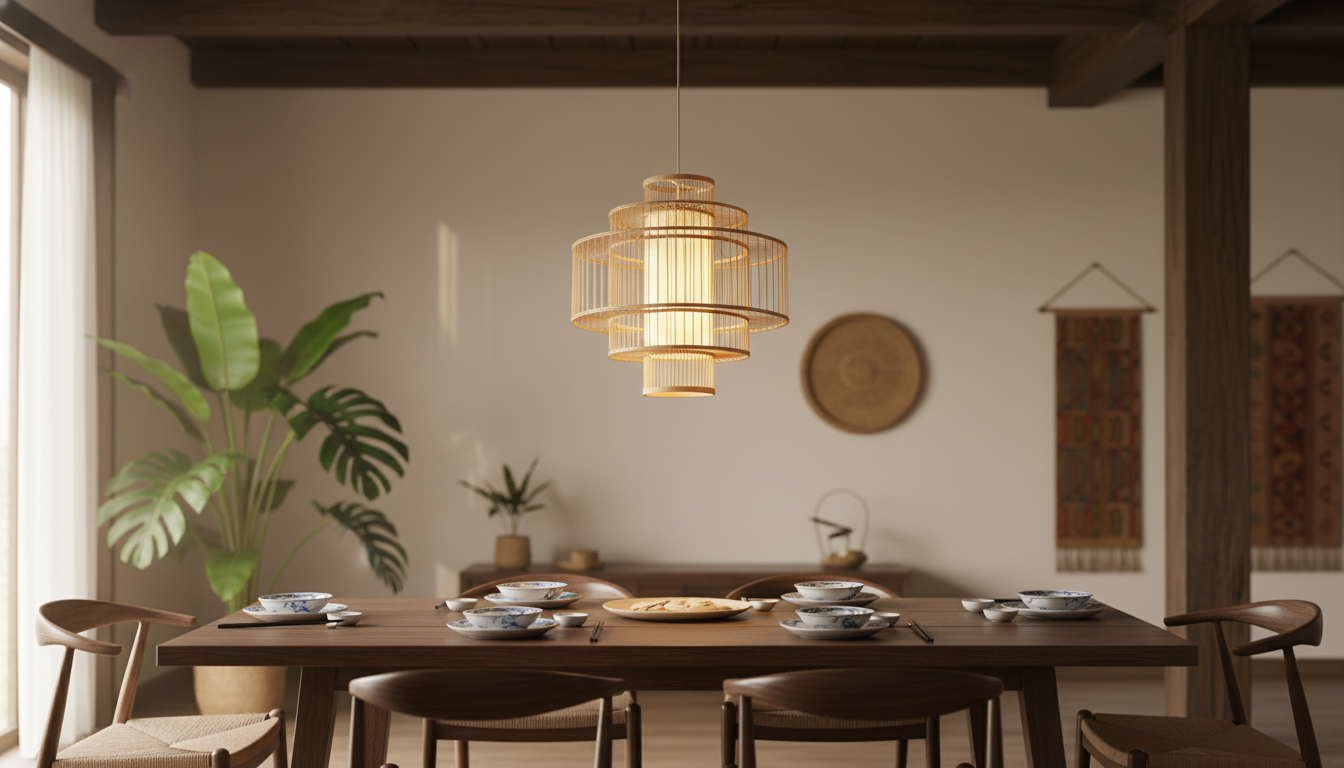
Southeast Asian-Inspired Bamboo and Rattan Pendant Chandelier
Warm, sculptural, and naturally textured, a bamboo-and-rattan pendant chandelier brings an easy, resort-like calm to everyday spaces. The woven shade softens glare, adds pattern through shadow play, and pairs effortlessly with wood, linen, stone, and matte metals—ideal for dining areas, bedrooms, entryways, and covered patios where a relaxed statement piece is wanted.
What Makes the Look Distinct
Bamboo and rattan lighting has a signature presence: organic texture, airy volume, and a glow that feels inviting rather than harsh. That combination makes it especially effective in rooms where comfort matters as much as function.
- Woven bamboo and rattan create a layered texture that reads both artisanal and modern.
- The open weave typically produces a gentle glow while projecting subtle patterns onto walls and ceilings.
- Works across styles: coastal, Japandi, boho, tropical modern, and warm minimal interiors.
- A naturally warm palette helps balance cooler finishes like concrete, black metal, or stainless steel.
Materials and Finish Details to Look For
Not all woven pendants are built the same. A few details—especially around the weave, finish, and hardware—make a noticeable difference in how the fixture looks over time and how easy it is to live with day to day.
- Bamboo structure: lightweight yet sturdy; often used for the internal ribs or outer frame.
- Rattan weaving: flexible fiber that creates the visible lattice; check for consistent spacing and tight joins.
- Surface finish: natural, stained, or sealed; a sealed finish helps resist humidity and makes dusting easier.
- Hardware: confirm canopy and hanging components suit the ceiling type (drywall, wood beam, sloped ceiling) and desired drop length.
Where It Works Best at Home
Because woven shades feel visually light, they can go bigger than a comparable metal fixture without making a room feel crowded. The key is choosing a location where the shade can breathe and the shadows can do their work.
- Dining table: centers the room and adds softness above hard surfaces; aim for a balanced diameter-to-table-width proportion.
- Kitchen island: use one larger statement pendant or multiple smaller pendants in a row; keep consistent spacing.
- Bedroom: creates a calming focal point while staying visually light compared to heavy metal chandeliers.
- Entryway or stair landing: adds instant character; ensure adequate clearance for doors and foot traffic.
- Covered outdoor areas: choose protected locations away from direct rain; humidity-friendly finishes are preferred.
Quick Placement Guide
| Room/Area | Recommended Hanging Height | Notes |
|---|---|---|
| Dining table | Bottom of fixture ~30–36 in above tabletop | Adjust higher for taller ceilings; keep centered with table. |
| Kitchen island | Bottom of fixture ~30–36 in above countertop | For multiples, keep even spacing and align with island length. |
| Entryway | At least 7 ft clearance from floor (or higher) | Scale up for two-story foyers; avoid blocking sightlines. |
| Bedroom | High enough to clear headspace near walking paths | Consider dimmable bulbs for a softer evening mood. |
| Covered patio | Follow indoor clearances; keep dry | Use suitable bulbs/fixtures where damp conditions apply. |
Light Quality, Bulb Pairing, and Dimming
The weave is part of the lighting design. A more open lattice creates brighter, more patterned light; tighter weaves feel calmer and more diffuse. Bulb choice finishes the effect.
- Warm white bulbs (around 2700K–3000K) complement natural fibers and enhance the amber tone of bamboo and rattan.
- A frosted bulb can reduce glare if the weave is wide and the bulb is visible.
- Dimmable setups help shift from bright task light (meals, prep) to ambient light (evenings).
- If using smart bulbs, confirm compatibility with the socket type and any dimmer switch installed.
For practical guidance on efficient bulb options, review lighting resources from ENERGY STAR and the U.S. Department of Energy.
Choosing the Right Size and Drop
Scale is what makes a woven pendant look intentional rather than accidental. When the shade is too small, it can look like an afterthought; when it’s too large, it may overwhelm sightlines (especially in open kitchens).
- Diameter: larger shades make a bolder statement and diffuse light more broadly; smaller shades feel airy and minimalist.
- Ceiling height: taller rooms can handle longer drops; shorter rooms look best with a compact profile or shorter stem/cord.
- Visual weight: woven pendants look lighter than metal fixtures of the same size, which can allow slightly larger scaling.
- Mock it up: use a temporary hook and a tape measure (or painter’s tape) to preview the drop height before final installation.
Installation and Safety Considerations
A chandelier is both decor and electrical equipment, so the best-looking install is also the safest. If the ceiling box, wiring, or slope situation is unclear, professional help can prevent sagging, flicker, or future damage.
For broader safety and certification context, see UL Solutions for how product safety certification is typically approached.
Care, Cleaning, and Longevity
Styling Ideas for a Southeast Asian-Inspired Mood
Featured Picks (In Stock)
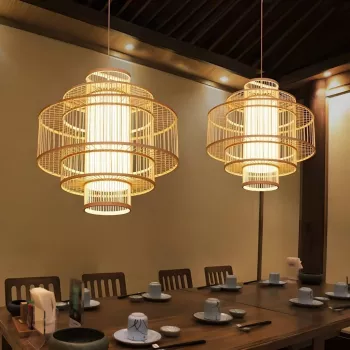
- Southeast Asian-Inspired Bamboo and Rattan Pendant Chandelier
- RGB USB Condenser Microphone for Streaming, Recording, Gaming & Studio
- Ultralight 4-Season Tent for 3-4 People with Double Layers and Living Room
FAQ
Can a bamboo and rattan pendant chandelier be used in a humid climate?
Yes—it’s typically suitable for indoor spaces and covered areas when kept out of direct rain. Look for sealed finishes, maintain good airflow, and keep the fixture dry to reduce the risk of swelling or mold.
What bulb color temperature looks best with woven bamboo and rattan?
Warm white light (about 2700K–3000K) flatters the natural tones and enhances the cozy glow. If the weave is open and the bulb is visible, a frosted bulb can help reduce glare.
How high should a pendant chandelier hang over a dining table?
A common guideline is about 30–36 inches from the tabletop to the bottom of the fixture. Adjust slightly based on ceiling height, the scale of the shade, and clear sightlines across the table.









Leave a comment