20-Ton Air Hydraulic Bottle Jack: Specs, Safety, Setup
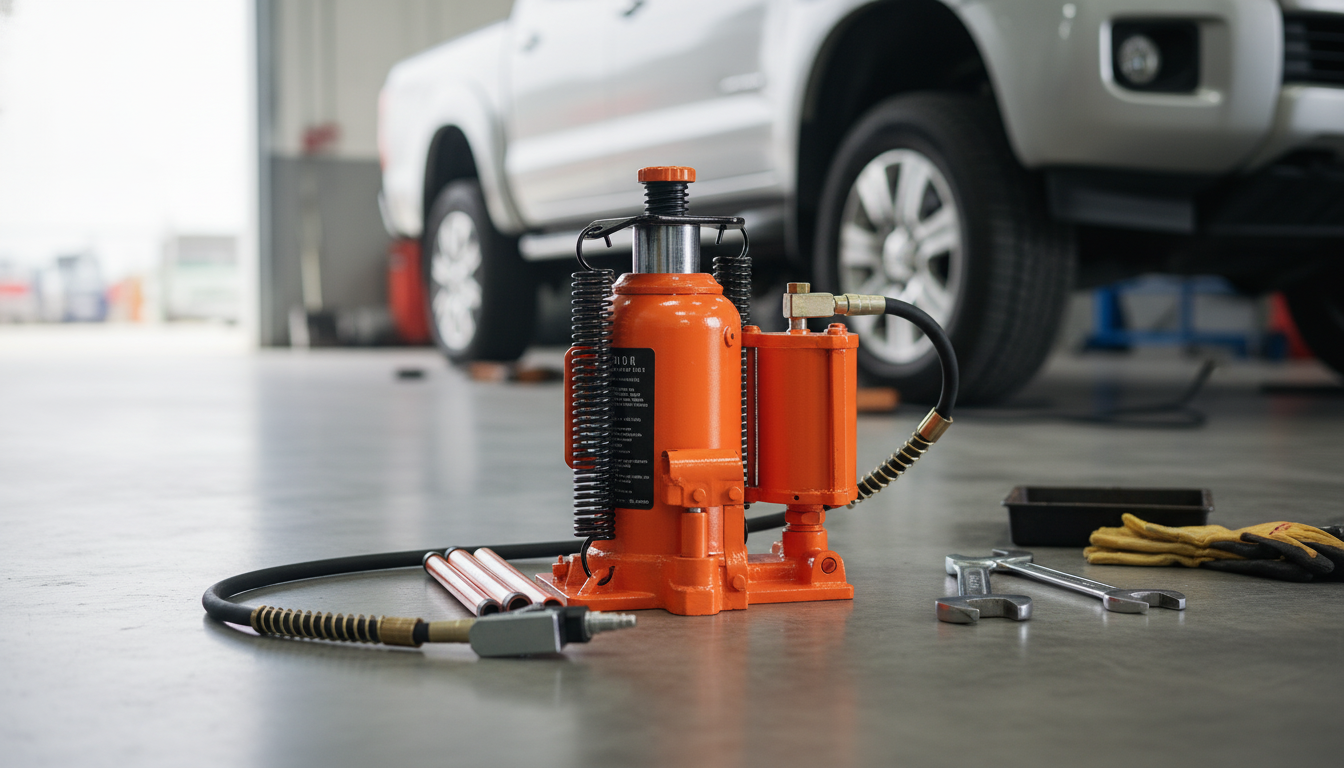
20 Ton Air Hydraulic Bottle Jack: Fast, High-Capacity Lifting for Heavy Jobs
A 20-ton air hydraulic bottle jack combines shop-air convenience with hydraulic lifting power for heavy vehicles and equipment. It’s built for situations where a standard manual bottle jack is too slow or too tiring during repeated lifts—while still delivering the controlled, vertical lifting that hydraulic jacks are known for. Below is a practical guide to what this style of jack does best, how to use it safely, what to check before buying, and how to match capacity and lift range to real-world work.
What an air hydraulic bottle jack is designed to do
An air hydraulic bottle jack uses compressed air to drive the hydraulic pump, dramatically reducing (or eliminating) hand pumping during repetitive lifts. That air-assist feature is especially helpful in fleet bays, agricultural shops, and service trucks where time and fatigue add up across the day.
- Uses compressed air to speed up hydraulic lifting, reducing manual pumping during repetitive lifts.
- Best suited for heavy loads such as trucks, trailers, buses, agricultural equipment, and industrial machinery (within rated capacity).
- Works as a vertical lifting tool; it is not a stand, not a winch, and not intended to support a load for extended periods.
- Typically used on hard, level surfaces with appropriate cribbing/blocking when needed.
When a 20-ton capacity makes sense
A 20-ton jack shines when you’re lifting higher corner weights or dealing with heavier-duty chassis where smaller jacks can feel marginal—either from a capacity standpoint or from limited extension height.
- Appropriate for heavier vehicles and equipment where smaller (2–12 ton) jacks may be undersized or unstable due to lift height limits.
- Useful in fleets and workshops where speed matters—air assist reduces fatigue and improves throughput.
- A practical choice when lifting points are high off the ground and the jack needs both high capacity and enough extension to reach the frame/axle.
- Not ideal for low-clearance cars unless the minimum height matches the lift point; low-profile floor jacks may fit better.
Capacity isn’t just about the vehicle’s gross weight. What matters for a single jack is the load at the corner or lift point you’re raising. Uneven loads, cargo distribution, attachments, and the lift location can all change the real force on the jack.
Key features to check before using or buying
Two jacks can both be labeled “20-ton” but feel very different in daily use. Before buying (and before the first lift), confirm the specs match your equipment and your shop air setup.
- Capacity rating: confirm the rated load is at or above the heaviest corner weight being lifted (not just the vehicle’s GVWR).
- Lift range (minimum height to maximum height): ensure it fits the lowest lift point and reaches the required working height with safe contact.
- Extension screw/ram travel: helps fine-tune height at the saddle without adding unstable stacking.
- Air requirements: confirm your shop compressor can supply the needed pressure/flow and the correct coupler/fitting type.
- Build and stability: a wide, stable base and a solid saddle reduce the chance of shifting under load.
- Control and release: look for a controlled lowering valve to avoid sudden drops.
- Portability: handle design and weight matter if moving around a shop or service truck.
Quick checklist for a 20-ton air hydraulic bottle jack setup
| Item to verify | Why it matters | What to confirm |
|---|---|---|
| Rated capacity | Prevents overload and component failure | Jack rating meets/exceeds the load being lifted |
| Lift range | Ensures the saddle reaches the lifting point and desired height | Minimum height fits; maximum height is sufficient |
| Air supply compatibility | Air-assist performance depends on compressor and fittings | Compressor pressure/CFM and coupler match requirements |
| Stable base and saddle contact | Reduces slipping and load shift | Flat, level ground; correct lift point; saddle centered |
| Support method | A jack lifts, stands support | Rated jack stands/cribbing ready before working under load |
How to lift safely with an air hydraulic bottle jack
Air-assist can make lifting feel effortless, which is exactly why disciplined setup matters. Treat every lift as if the load could shift—because it can.
For broader guidance on safe portable lifting and support practices, review the ASME PASE safety standard and relevant OSHA safety resources for vehicle support and shop operations.
Air system tips for smoother lifting
Care, storage, and troubleshooting basics
Product option in stock
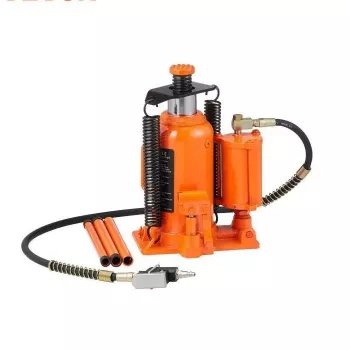
If you’re outfitting a bay or service truck for heavier lifts, this option is available now: 20 Ton Air Hydraulic Bottle Jack. Confirm lift range and air fitting details on the product page to match your vehicle’s lift points and compressor setup.
More in-stock picks
- RGB USB Condenser Microphone for Streaming, Recording, Gaming & Studio
- Ultralight 4-Season Tent for 3-4 People with Double Layers and Living Room
FAQ
Can an air hydraulic bottle jack hold a vehicle up while working underneath?
No. A jack is for lifting, not for supporting a load while you’re underneath it; use properly rated jack stands or solid cribbing before starting work, and lower in a controlled way when finished.
What compressor size is needed for an air hydraulic bottle jack?
It depends on the jack’s rated operating pressure and air consumption. Many shop compressors can run air-assist lifting as long as they maintain stable pressure and use the correct couplers—never exceed the jack’s rated PSI.
Why does a bottle jack sink or drift down after lifting?
Drifting can be caused by a leaking release valve, worn internal seals, contaminated fluid, or trapped air. Inspect the jack, follow the manufacturer’s bleeding procedure, and remove it from service if lowering becomes uncontrolled.














Leave a comment