Fast Stress Relief: Breathing, Grounding & Mini Resets
Break the Tension: Practical Stress Relief You Can Use in Minutes
Stress can spike in the middle of a workday, during conflict, or right before sleep. The most effective tools tend to be simple, repeatable, and easy to start even when the mind is racing. Below is a practical toolkit of fast breathing practices, short meditations, grounding methods, and time-management moves that help calm the body and restore focus—often in just a few minutes.
Spot the early signs of rising tension
Catching stress early is like hitting the brakes before a skid: the correction is smaller, faster, and safer.
Common body cues
- Tight jaw or shoulders
- Shallow breathing or breath-holding
- Stomach flutter, nausea, or a “drop” feeling
- Clenched fists, restless legs, headache
Common mind cues
- Looping thoughts or mental rehearsals
- Irritability, snapping, or feeling “wired”
- Catastrophizing (worst-case certainty)
- Trouble prioritizing what matters next
Common behavior cues
- Rushing or multitasking frantically
- Procrastination that looks like “getting ready to start”
- Overeating or undereating
- Scrolling for relief without actually feeling better
Quick check-in (30 seconds): Rate stress from 0–10, note where it sits in the body, and name the main worry in one sentence. That tiny bit of clarity reduces the feeling of being mentally “surrounded.”
Breathing exercises that calm the nervous system fast
Breathing practices work because they give your nervous system a steady, physical signal of safety. If you tend to “forget to breathe” when stressed, start with the gentlest option first and keep it comfortable.
Box breathing (4–4–4–4)
Inhale for 4, hold for 4, exhale for 4, hold for 4. Repeat for 4 rounds to steady attention and reduce impulsive reactions—useful before a difficult conversation or meeting.
Physiological sigh
Inhale through your nose, “top up” with a second short inhale, then do a long, slow exhale. Repeat 2–3 times. This is a rapid downshift when stress spikes after an upsetting email, a near-miss while driving, or sudden social anxiety.
Extended exhale breathing
Inhale for 4, exhale for 6–8. Continue for 2–5 minutes. A longer out-breath nudges the body toward relaxation, making it a strong pre-sleep option or a reset after a tense commute.
Common snag: dizziness. If that happens, reduce how deep you inhale, slow the pace, and return to normal breathing for 30 seconds.
| Technique | How long | Best for | Simple cue |
|---|---|---|---|
| Box breathing | 1–3 min | Steady focus and emotional control | “Equal sides.” |
| Physiological sigh | 20–40 sec | Rapid downshift from acute stress | “Two inhales, one long exhale.” |
| Extended exhale | 2–5 min | Winding down and easing tension | “Make the out-breath longer.” |
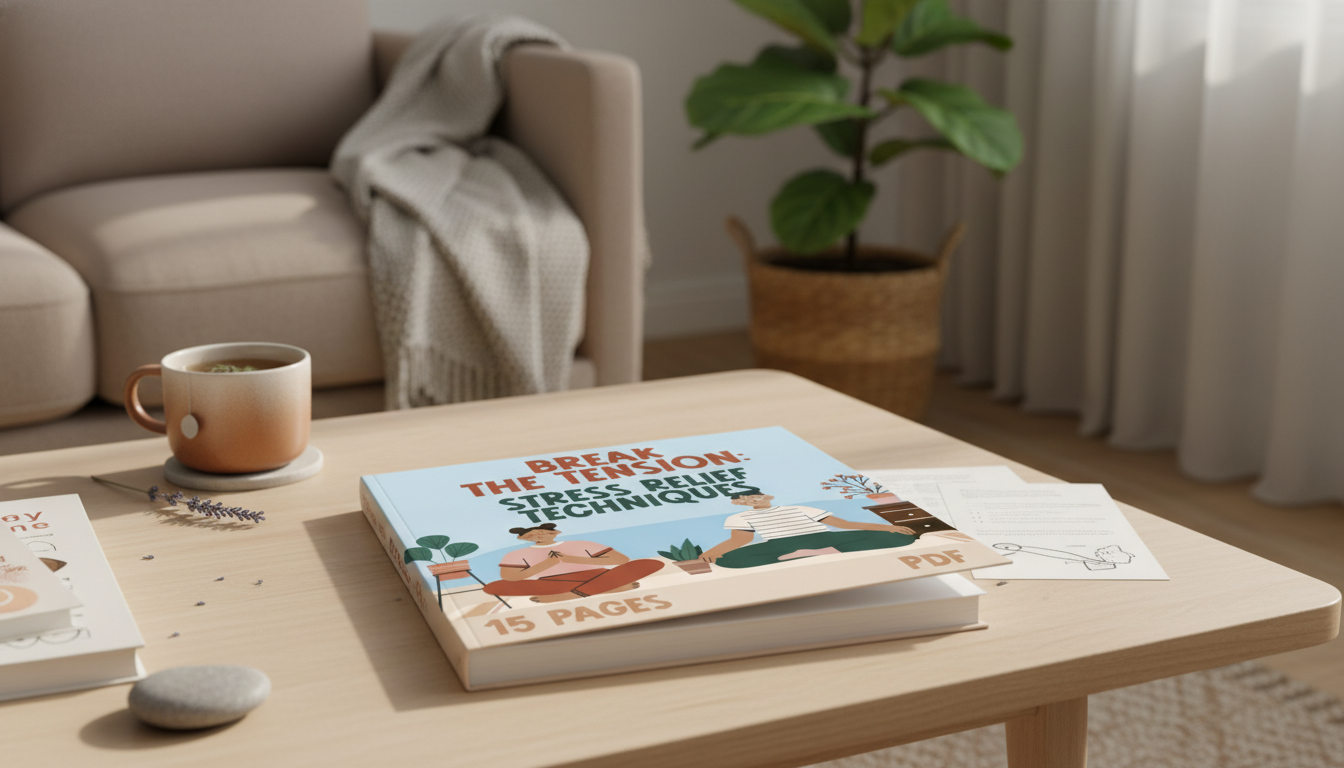
For a deeper, step-by-step toolkit you can keep handy, consider Break the Tension: Stress Relief Techniques – Breathing Exercises, Quick Meditations, Grounding Techniques, and Time Management Tips to Reduce Stress.
Quick meditations for busy moments
Meditation doesn’t have to mean silence, candles, or a perfect mindset. The goal is simply to interrupt the stress loop and re-aim attention.
60-second reset
Feel both feet on the floor. Relax your tongue (it often tightens without you noticing). Soften your eyes. Count 10 slow exhales. If you lose count, restart at one—no problem.
Noting practice (2–3 minutes)
Label what you notice as “thinking,” “hearing,” or “feeling,” then return to the breath. This creates a little distance from racing thoughts without needing to “win” against them.
Body scan mini (3 minutes)
Move attention from forehead → jaw → shoulders → chest → belly → hands. On each exhale, release one area by 5%. Small releases add up fast.
Aftercare: Choose one next action—send one reply, start one task, or drink water—so the calm turns into momentum instead of drifting back into worry.
Grounding techniques when anxiety feels overwhelming
Grounding is especially helpful when you feel panicky, disoriented, or “stuck in your head.” It shifts attention from imagined threat to present reality.
For more background on stress and coping strategies, see the American Psychological Association’s overview at Stress management and the National Institute of Mental Health page on Stress (overview and coping). For a grounding walkthrough, PTSD UK provides a helpful reference at grounding techniques.
Time management moves that reduce stress at the source
If movement helps you discharge stress, consider adding a short indoor ride between blocks with the Magnetic Indoor Bike Trainer Stand for 24-28” & 700C Bikes – 6-Level Resistance.
Build a personal ‘break the tension’ routine
For a change of scene that naturally supports decompression (quiet, fresh air, fewer notifications), an occasional overnight outdoors can help—especially when paired with breathing and grounding. If that fits your lifestyle, the Ultralight 4-Season Tent for 3-4 People with Double Layers and Living Room is an option for a more comfortable reset.
When extra support is needed
FAQ
What is the fastest way to calm down during a stressful moment?
Try 2–3 rounds of a physiological sigh or 60–90 seconds of extended-exhale breathing, then plant both feet on the floor and name a few things you can see around you to stabilize.
How often should breathing exercises be practiced to reduce stress long-term?
Practice for 2–5 minutes daily and also “as needed.” Consistency matters more than duration, so tying it to routines like waking up or starting work helps it stick.
Can grounding techniques help with racing thoughts at night?
Yes—use 5–4–3–2–1, a short body scan, or a brief temperature shift, and keep screens low. Pair it with writing tomorrow’s top 1–3 tasks to offload worry and give your brain a stopping point.















Leave a comment