Camping Tripod Storage Rack Setup Tips for Tidy Camps
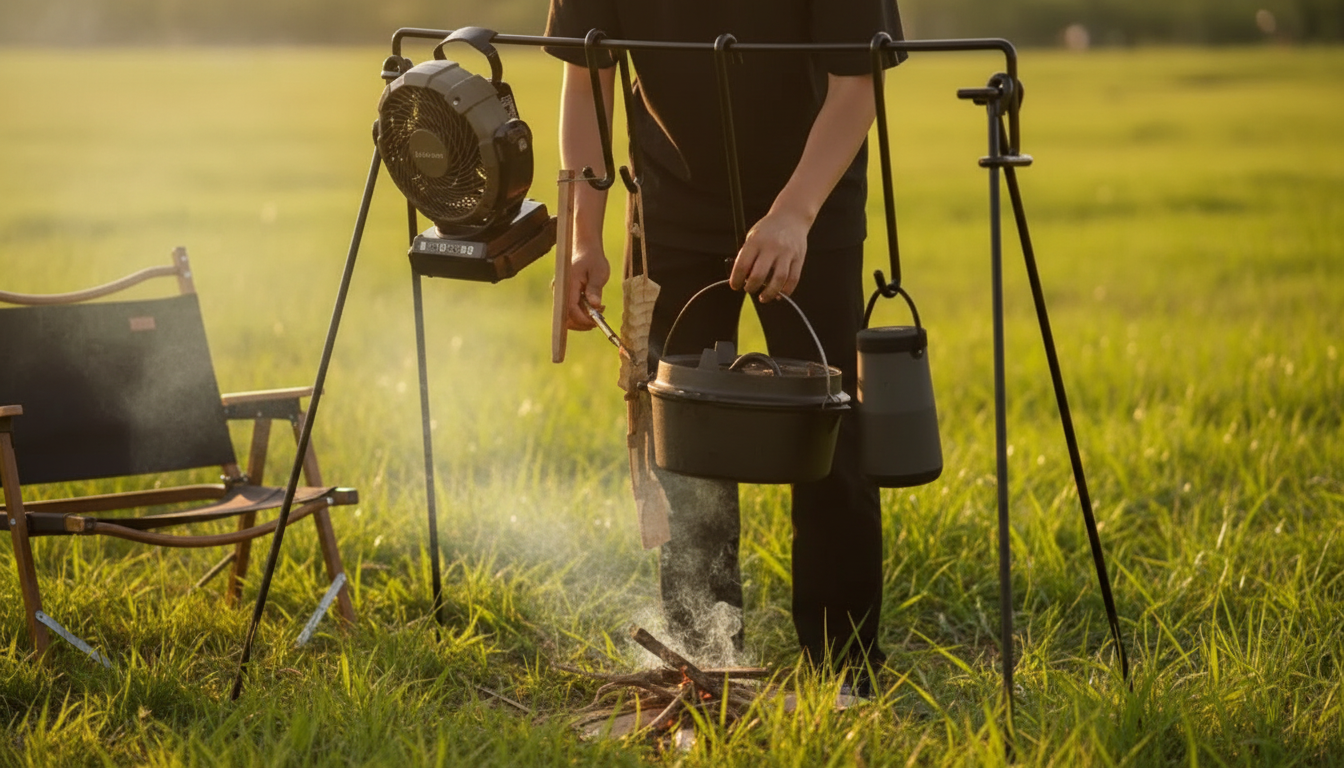
Camping Tripod Storage Rack: Keep Camp Tools Organized and Ready
A tripod rack is a small camp upgrade that pays off every time you cook, clean up, or search for a headlamp after dark. By lifting gear off the ground, it helps protect essentials from dirt, moisture, and that inevitable scatter of pine needles. It also makes camp routines smoother: items stay visible, reachable, and easier to put back where they belong.
Below are practical ways to use a camping tripod storage rack, what to look for before buying, and simple setup habits that keep camp life calm—especially when multiple people are sharing the same space.
What a tripod storage rack does at camp
A good tripod storage rack creates a dedicated “home base” for the small, frequently used items that otherwise end up piled on a table—or lost in a tote.
- Creates a dedicated “home” for frequently used items like cookware, mugs, headlamps, gloves, and fire starters.
- Reduces clutter on the picnic table and keeps gear away from sand, mud, and pine needles.
- Helps prevent misplaced items by assigning zones (cook kit, lighting, hygiene, repair kit).
- Adds a predictable workflow: grab, use, return—especially helpful when camping with groups.
If you’re building a kitchen corner or a tidy tent entry, the Camping Tripod Storage Rack is a straightforward way to create that off-the-ground storage point without needing a picnic table or a perfectly flat surface.
Common ways to set it up
Tripod racks are flexible by nature. The best setup is the one that matches how you move through camp—cooking, hanging out, then winding down for the night.
Kitchen station
- Hang utensils, a small cutting board, spice kit, and towel; keep a bin below for dry goods.
Lantern and lighting corner
- Hang lanterns/headlamps and keep spare batteries in a small pouch.
Entry point organizer
- Place near the tent door for keys, multitool, bug spray, and headlamps.
Wet-dry separation
- Dedicate one side for wet items (towel, rain shell) and another for clean/dry items.
Vehicle basecamp
- Set it beside the tailgate to unload and sort gear quickly.
For larger campsites or shoulder-season trips where you want more living space protected from weather, pairing an organized gear station with a roomy shelter helps a lot. Consider setting your rack near an entry point to the Ultralight 4-Season Tent for 3-4 People with Double Layers and Living Room so headlamps, gloves, and rain layers always land in the same place.
How to choose the right rack for your gear
Not all racks behave the same once they’re loaded up and the wind kicks in. Choose based on how you camp most often—quick overnights, family weekends, or longer basecamps.
- Capacity and spacing: Confirm the rack can hold the number of items typically used at once (kitchen kit, lighting, and personal items).
- Stability: Look for a design that stays steady on uneven ground and doesn’t tip when weight shifts.
- Attachment options: Hooks, loops, shelves, and tie points make it easier to customize a setup.
- Packability: Prioritize a foldable or compact form if storage space is limited.
- Materials and weather tolerance: Choose corrosion-resistant finishes and fabrics that dry quickly.
- Ease of cleaning: Smooth surfaces and removable parts simplify cleanup after cooking or rain.
Quick rack selection checklist
| Need | What to look for | Why it matters |
|---|---|---|
| Cooking setup | Multiple hooks/tiers, room for utensils and a towel | Keeps the prep area clear and reduces cross-contamination from ground contact |
| Uneven campsites | Wide stance or secure anchor points | Improves stability when items are added/removed |
| Frequent rain/dew | Rust-resistant hardware, quick-drying materials | Helps prevent corrosion and mildew odors |
| Minimal packing space | Folds down compactly, lightweight build | Easier to carry and store in a vehicle or gear bin |
| Family or group camping | Higher capacity, clear zones | Reduces lost items and keeps shared gear organized |
Smart organization layouts (simple systems that work)
The fastest way to make a tripod rack “stick” as part of camp is to keep the system simple enough that anyone can follow it—especially at night or when it’s raining.
For food handling and cleanup flow, a quick refresher on smart kitchen layout helps: REI Expert Advice — Camp Kitchen Basics.
Setup and safety tips
For campfire and stove-area safety reminders, review USDA Forest Service — Campfire Safety. A tidy, predictable kitchen zone makes it easier to keep hot surfaces and foot traffic separated.
Care, cleaning, and storage between trips
Good organization also supports low-impact camping habits—less rummaging, fewer dropped items, and fewer stray scraps around camp. The Leave No Trace Seven Principles are a solid framework for keeping camp clean and respectful of the site.
A practical pick for organized camp setups
- Camping Tripod Storage Rack: a straightforward option for building an off-the-ground storage point near a kitchen area, tent entry, or vehicle basecamp.
- Useful for keeping essentials visible and easy to reach during cooking, cleanup, and nighttime routines.
- Best results come from pairing it with small pouches, carabiners, and a consistent zone layout.
FAQ
Where should a tripod storage rack be placed at a campsite?
Set it on firm, level ground close to the activity it supports—next to the kitchen area, near the tent entry, or by the tailgate. Keep it away from stove flames and out of high-traffic walkways to reduce trip hazards.
How can items be kept from swinging or falling off in the wind?
Balance weight across the rack, keep heavier items lower, and clip gear in with carabiners or short bungees. If gusts increase, reduce long dangling straps and lower the overall load to improve stability.
What’s the easiest way to keep a camp organization system consistent?
Zone the rack by task (cooking, lighting, repairs), use dedicated pouches for small items, and assign fixed hook locations for essentials like headlamps and towels. Consistency improves fast when everyone returns items to the same spot.













Leave a comment