What “Sturdy” Means in Heavy-Duty Kids Swing Sets
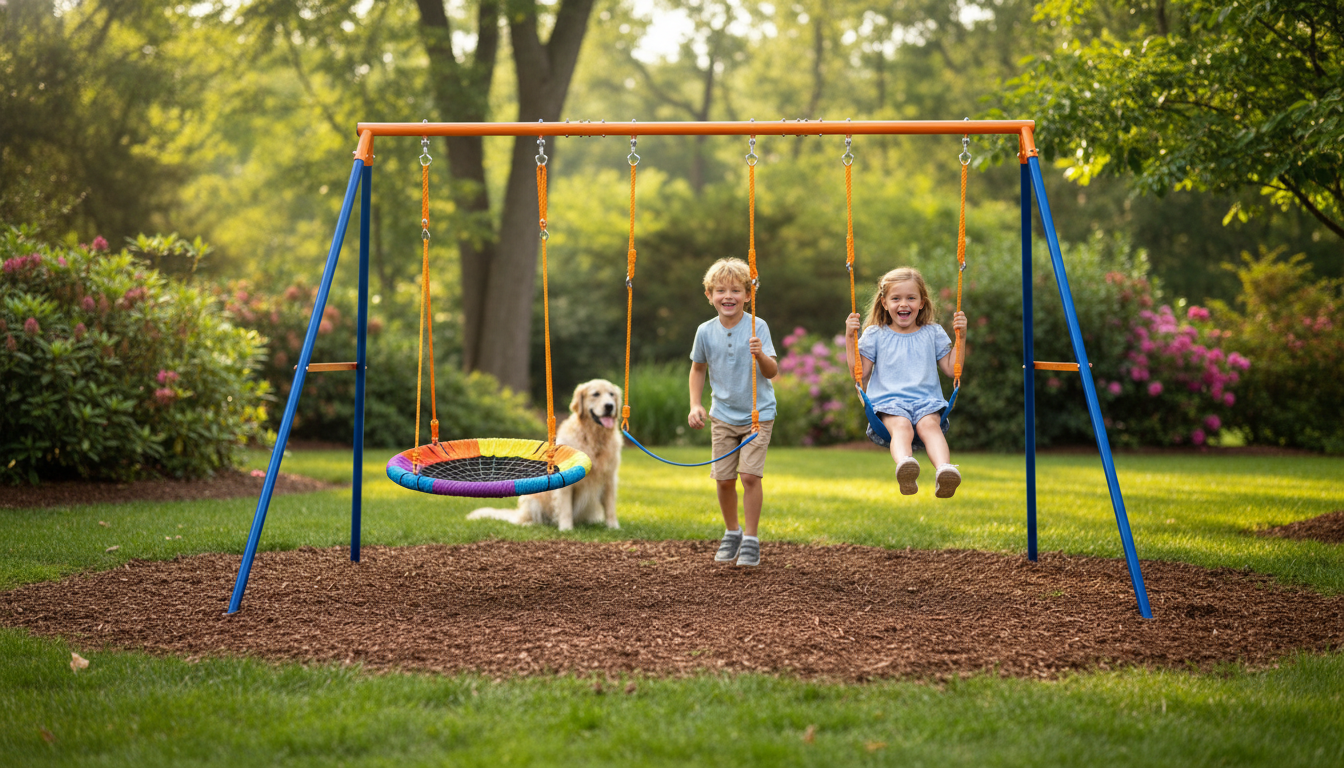
Heavy-Duty Outdoor Swing Set for Kids: What “Sturdy” Should Really Mean
A sturdy backyard swing set can turn everyday outdoor time into active play while giving parents peace of mind about stability and safety. “Heavy-duty” shouldn’t just be a marketing label—it should translate into less wobble, smoother swinging, and hardware that stays tight after weeks of excited use. Below is a practical guide to choosing the right setup for your yard, assembling it the right way, and keeping it solid season after season.
What Makes a Swing Set Feel Truly Heavy-Duty
A swing set earns the “heavy-duty” label when it stays steady under motion, resists weather, and holds up to repeated stress without loosening or flexing.
- Frame strength: Thicker-gauge steel tubing or dense, properly sealed wood helps resist flexing, wobble, and long-term fatigue—especially at the top beam and leg connections.
- Stability features: A wide stance, reinforced joints, and secure anchoring reduce sway during energetic play (think pumping, twisting, and quick dismounts).
- Hardware quality: Rust-resistant bolts, locking nuts, and covered fasteners help prevent loosening and reduce the chance of sharp edges developing over time.
- Swing hangers: Durable hangers—often designed for smoother rotation—can reduce squeaks and slow down wear on chains or ropes.
- Finish and weather protection: Powder-coated steel or treated/finished wood slows corrosion, rot, and splintering, which matters most around high-touch areas like hand grips and ladder rails.
For additional safety guidance that overlaps well with home play equipment, the CPSC Public Playground Safety Handbook is a helpful reference point for layout and hazard awareness.
Choosing the Right Size and Layout for the Yard
Many swing-set issues start with placement. Even a strong frame can feel unstable if it’s set too close to obstacles or installed on uneven ground.
- Measure the footprint plus clearance: Plan open space in front, behind, and to the sides so kids can swing freely without approaching fences, trees, or patio edges.
- Consider user ages: Younger kids often do best with secure bucket-style seating, while older kids typically want belt swings and a bit more height and clearance.
- Plan for growth: If siblings (or neighborhood friends) will play together, choose a configuration that won’t feel outgrown quickly.
- Surface planning: Grass can be convenient, but high-traffic zones wear quickly. Mulch or rubber tiles can help manage impact and mud while staying practical to maintain.
- Sun and wind exposure: A little shade can extend playtime during hot months, while open, windy areas deserve extra attention to anchoring and re-checking after storms.
For an overview of playground equipment standards, see the ASTM playground standards overview. It’s not a substitute for your product manual, but it helps explain why details like spacing, materials, and hardware design matter.
Safety Checks Before the First Swing
Before kids hop on, a few deliberate checks can prevent the most common issues: loose hardware, pinching points, and inadequate clearance.
- Follow age and weight guidance: Use the manufacturer’s guidance for each component (frame, swings, glider, trapeze, and any add-ons) rather than guessing.
- Confirm bolt tightness: Verify every bolt is fully tightened and secured with the intended locking hardware, then re-check after the first 24–48 hours of use.
- Verify anchors match the soil: Install anchors exactly as directed for your ground type. Avoid placing a set on unstable fill or loose ground without proper prep.
- Inspect swing paths: Remove obstacles like planters, edging, low branches, fences, and patio furniture from the full arc of motion.
- Cover exposed hardware: Cap or cover any exposed ends and confirm chains/ropes can’t pinch small fingers at connection points.
For kid-focused outdoor safety reminders that pair well with backyard play, visit HealthyChildren.org’s outdoor safety resources.
Quick Comparison Checklist
| What to check | Why it matters | What to look for |
|---|---|---|
| Frame material | Determines rigidity and longevity | Thick steel tubing with protective coating or sealed, treated lumber |
| Anchoring system | Prevents tipping and reduces wobble | Ground anchors matched to soil; firm installation and periodic re-checks |
| Joint reinforcement | Controls sway under load | Brackets/gussets, solid connection points, minimal flex during use |
| Swing hangers | Smooth motion and reduced wear | Durable hangers, secure mounting, consistent alignment |
| Hardware corrosion resistance | Safer long-term outdoor use | Rust-resistant bolts/nuts; covered fasteners where possible |
| Seat and chain/rope condition | Comfort and safety | UV-resistant seats; smooth chains/ropes; pinch-point awareness |
| Clearance and surfacing | Reduces injury risk | Adequate open space and practical impact-attenuating ground cover |
Assembly Tips That Improve Stability
Care and Maintenance Through the Seasons
Featured Options
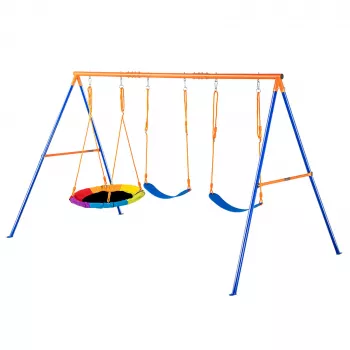
- Heavy-Duty Outdoor Swing Set for Kids ($162.51) — A ready-to-order backyard set designed for active outdoor play. Confirm yard measurements, clearance, and age/weight guidance before ordering.
- Ultralight 4-Season Tent for 3-4 People with Double Layers and Living Room ($321.51) — A family-friendly add-on for outdoor weekends when you want to extend play into a backyard campout.
FAQ
How much space is needed around a backyard swing set?
Plan for clear space beyond the frame in all directions so the swings can travel freely without nearing fences, branches, or furniture. The exact clearance depends on the set’s dimensions and the manufacturer’s instructions, so measure your use zone before buying and again before anchoring.
Do swing sets need to be anchored in the ground?
Anchoring greatly improves stability and helps prevent tipping or shifting during high-energy play. Use anchors designed for your soil type, install them exactly as directed, and re-check them after heavy rain, freeze/thaw cycles, or storms.
How often should a swing set be inspected for safety?
Do a quick monthly inspection and add extra checks after storms or periods of heavy use. Focus on bolt tightness, hangers, chains/ropes, seat condition, rust or splintering, and whether the ground around anchors remains firm and level.













Leave a comment