GRBL 3-Axis CNC Router Kit: Setup, Cuts & Clean Results
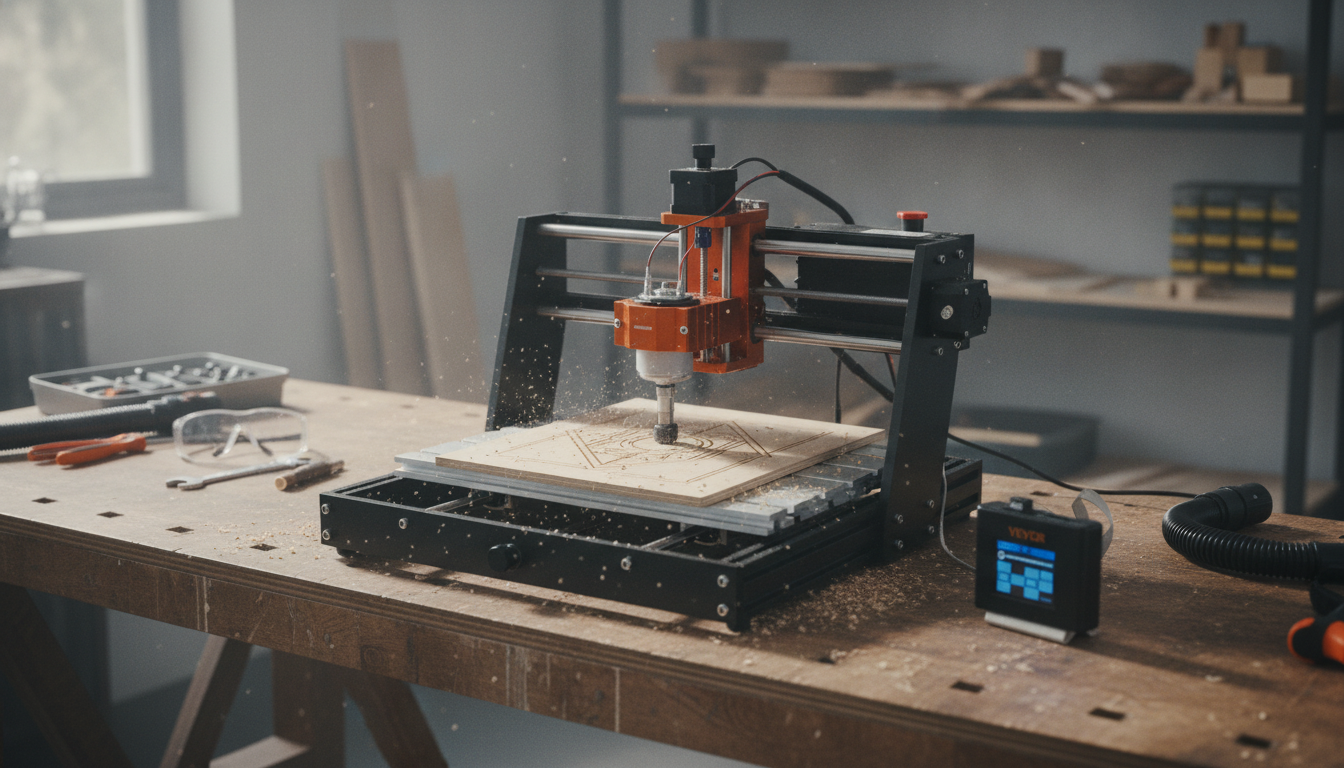
3-Axis CNC Router Machine Kit with GRBL Control: What It’s Good For and How to Get Clean Results
A 3-axis CNC router kit with GRBL control is a practical starting point for making precise cuts, engravings, and light milling on wood, plastics, and other common materials. It’s a compact way to go from a digital design to repeatable parts—without the size and cost of an industrial CNC. Below is a clear breakdown of what this style of kit does best, what to verify before the first cut, and the setup habits that lead to smoother finishes and fewer ruined blanks. For more guidance, see [PDF] Effects of Design Parameters on Dimensional Accuracy of Parts ….
What This 3-Axis CNC Router Kit Is Built For
A typical 3-axis router moves on X, Y, and Z, which covers most day-to-day routing and engraving jobs on flat stock. That makes it well suited for: For further reading, see LinuxCNC.
- Routing and profile cuts: cutting shapes out of sheet goods or boards, including outside contours and internal cutouts.
- Pocketing: clearing material in a defined area for recesses, trays, or joinery features.
- Engraving and V-carving: text, logos, line art, and decorative details.
- 2.5D and light 3D work: layered depths and basic relief carving depending on rigidity, bit choice, and conservative feeds/speeds.
For makerspaces, hobby shops, small signage runs, and product prototyping, a GRBL-based kit hits a sweet spot: small footprint, approachable software options, and repeatable motion once tuned.
How GRBL Control Fits Into the Workflow
GRBL is a widely used open-source motion control firmware that reads G-code and drives stepper motors. It’s popular because it’s mature, well-documented, and supported by many sender programs and controllers (learn more at the official GRBL repository).
The usual workflow looks like this:
- CAD: design the part (shape, text, pockets).
- CAM: choose tools and generate toolpaths (feeds, speeds, stepdowns).
- Post-process: export G-code.
- Send to machine: use a GRBL sender to stream the file and control the job. A common option is Universal Gcode Sender (UGS).
Early on, it’s worth getting comfortable with a few GRBL concepts that directly affect repeatability and crash prevention:
- Machine coordinates vs. work coordinates: machine coordinates relate to homing; work coordinates relate to where your part is clamped.
- Homing and soft limits: consistent homing enables predictable travel boundaries and helps prevent overtravel.
- Feed and rapid rates: a file may “run,” but the machine can still lose position if accelerations and speeds exceed what the mechanics can handle.
Key Specs and Checks Before Running the First Job
Small CNC routers reward careful mechanical setup. Before cutting real material, verify rigidity and motion quality—these are the difference between clean edges and chatter marks.
Pre-Run Checklist (Quick Verification)
| Check | What to Look For | Why It Matters |
|---|---|---|
| Squareness | Gantry and frame measure square across diagonals | Reduces taper and dimensional error |
| Backlash | Minimal play when reversing direction | Improves accuracy and surface finish |
| Homing/limits | Switches trigger reliably; soft limits configured | Prevents crashes and lost position |
| Wiring | Secure connectors, proper strain relief | Avoids intermittent faults mid-cut |
| Spindle mount | No wobble; tight fasteners | Improves finish; reduces tool breakage |
| Spoilboard | Flat and surfaced if needed | Better depth consistency across the work area |
Setup Steps That Make the Machine Cut Better
Materials, Tooling, and Project Examples
- Wood (softwood/hardwood): sharp end mills help prevent burning and fuzzy edges. Use lighter passes if the machine is compact; depth-of-cut that’s too aggressive invites chatter.
- Plywood/MDF: dust control is critical. MDF in particular creates fine particulate—review health guidance from NIOSH wood dust resources. Compression bits can improve edge quality on sheet goods when the machine can handle them.
- Plastics (acrylic, HDPE): O-flute cutters often produce cleaner results. If chips aren’t evacuating, plastics can melt and reweld—adjust chip load and consider air assist if available.
Safety and Reliability Basics
Common Issues and Fast Troubleshooting
Product Snapshot and Buying Notes
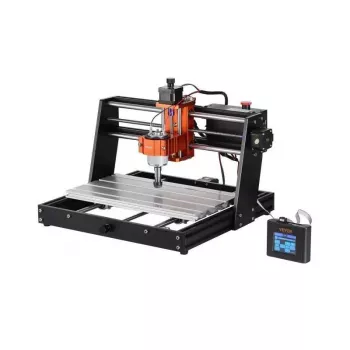
If you want a straightforward GRBL-controlled kit for routing and engraving, the 3-Axis CNC Router Machine Kit with GRBL Control is positioned for measured, repeatable G-code workflows. Plan for the common add-ons that typically aren’t included: cutting tools, workholding hardware, a spoilboard, measuring tools, and dust collection.
For creators who also document builds, stream setup tips, or record toolpath walk-throughs, an internal add-on that can improve audio clarity is the RGB USB Condenser Microphone for Streaming, Recording, Gaming & Studio.
At-a-Glance Details
| Item | Detail |
|---|---|
| Product | 3-Axis CNC Router Machine Kit with GRBL Control |
| Price | 375.32 USD |
| Availability | In stock |
| Best for | Routing/engraving workflows using GRBL and G-code senders |
FAQ
What software is needed to run a GRBL-controlled CNC router kit?
You’ll typically use CAD software to design, CAM software to generate toolpaths and export G-code, and a GRBL sender (such as UGS or Candle) to stream the job to the controller. The best combination depends on your operating system and whether you’re doing simple 2D cuts, 2.5D pockets, or 3D relief work.
Can a 3-axis CNC router handle aluminum?
Yes, for light cuts—assuming rigid workholding, the right cutter, and conservative feeds/speeds. Shallow passes, chatter control, and chip evacuation (often with air) matter more than raw spindle power on compact kits.
Why do cuts come out the wrong size even when the design is correct?
Common causes include incorrect steps/mm calibration, backlash, belt or lead screw issues, skipped steps from aggressive acceleration, and inconsistent work zeroing. Run a calibration pattern, tighten mechanics, and slow the job down before increasing speed.













Leave a comment